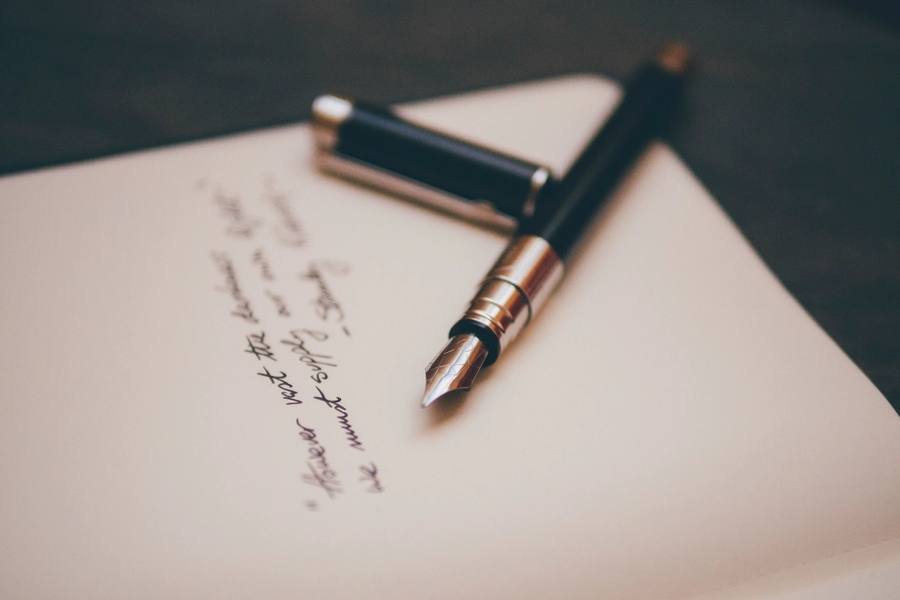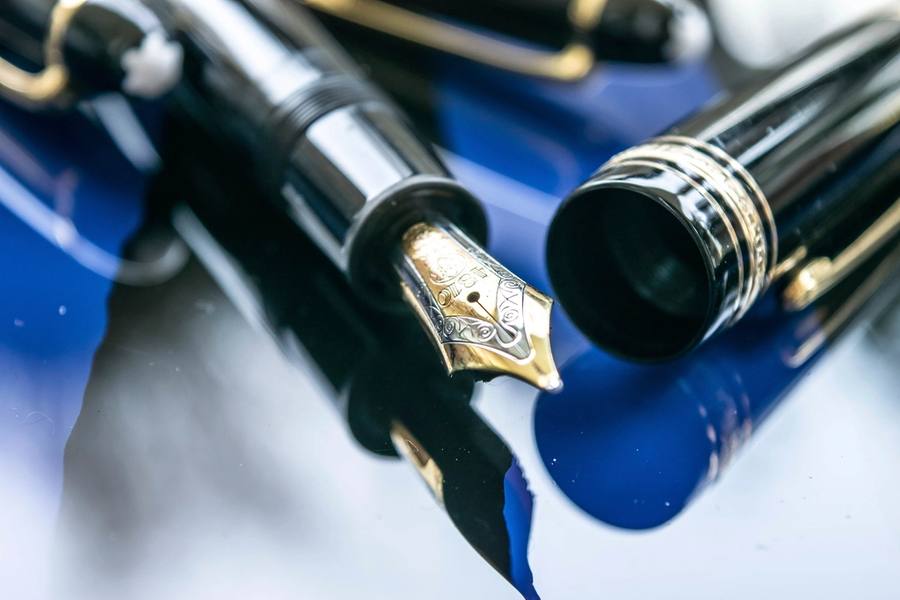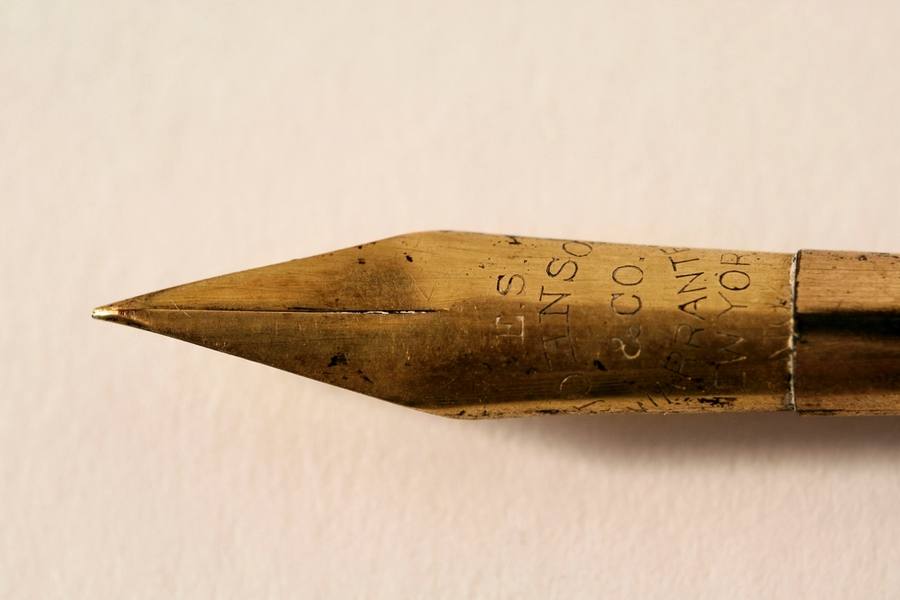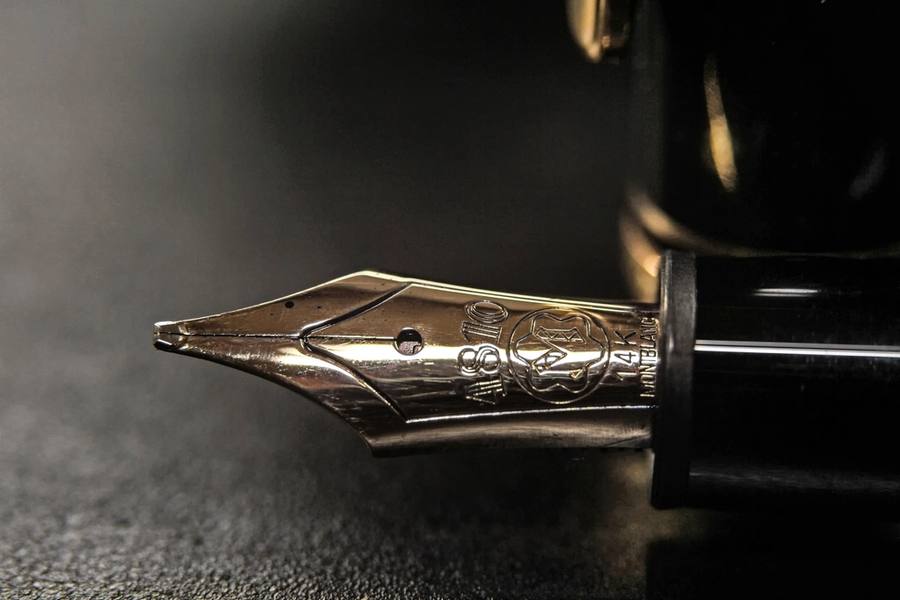
Representative image (stock photo); not the exact product.
The Range Is The Point
Cartridges come in perhaps a dozen colours across most manufacturers, where bottled ink comes in thousands, including colours that shade, sheen and change appearance as they dry.
That variety is genuinely what makes fountain pens interesting as a hobby rather than only as a writing tool, and it costs considerably less per fill than cartridges do.
A bottle lasts for a very long time in normal use, which means the cost per page is lower than almost any other writing instrument once the pen is bought.
Shading And Sheen
Shading describes ink pooling more heavily in some parts of a stroke than others, producing variation in intensity within a single letter, which broader nibs show far better than fine ones.
Sheen is a different effect where ink dries with a metallic secondary colour visible at certain angles, which requires both a suitable ink and paper that does not absorb it immediately.
Both need the right paper, and a shading ink on absorbent paper produces a flat line, which is why paper and ink are chosen together rather than separately.
Some Inks Damage Pens
Iron gall inks, pigment inks and some waterproof formulations can corrode, clog or permanently stain a pen, and they require more careful maintenance than ordinary inks.
Shimmer inks contain suspended particles that settle in the feed and clog fine nibs, and they are unsuitable for a pen left unused between writing sessions.
For a first bottle, an ordinary well-behaved ink from an established manufacturer avoids all of it, and the more demanding inks are worth approaching once flushing and cleaning are routine.
Drying Time And Smudging
Fountain pen ink sits on the paper surface and takes considerably longer to dry than a ballpoint, which for left-handed writers pushing the hand across fresh writing is a genuine problem.
Faster-drying inks exist and are specifically useful for anybody whose hand follows their writing, and they frequently show less shading as the trade.
Paper affects drying as much as ink does, since absorbent paper takes ink immediately while coated paper leaves it sitting on the surface for many seconds.
Permanence And Archival Use
Most fountain pen inks are water soluble, which means a spilled drink can remove writing entirely, and for anything that must survive that is a real consideration.
Document and iron gall inks resist water and are more demanding on a pen, and pigment inks resist water and light and clog more readily.
For anything needing to last — records, signatures, anything legal — an archival ink is worth the additional maintenance it requires.
Sample vials are sold by most specialist retailers and allow trying a dozen colours for the price of one bottle, which given how much a bottle contains is considerably more sensible than committing to a full one of something unseen. Ink looks quite different in a bottle, on a screen and on the page, and a sample resolves that for very little.
The Verdict
The part of fountain pens that makes them a genuine interest rather than a writing tool, at a cost per page lower than almost anything else.
Some formulations damage pens, shimmer inks clog, and most inks are water soluble and vanish if a page gets wet.
Start with an ordinary ink from a known maker. Shimmer and iron gall inks are interesting and demand maintenance you have not learned yet.
At a glance
Pros
- Thousands of colours rather than a dozen
- Shading and sheen effects unavailable in cartridges
- Far cheaper per fill than cartridges
- A bottle lasts a very long time
Cons
- Some formulations corrode or stain pens
- Shimmer inks clog fine nibs
- Slow drying causes smudging for left-handers
- Most inks wash away entirely if wetted
Frequently asked questions
Why bottled rather than cartridges?
Thousands of colours rather than a dozen, including inks that shade and sheen, at considerably lower cost per fill. A bottle lasts a very long time, which makes the cost per page lower than almost any other writing instrument.
Are any inks bad for pens?
Iron gall, pigment and some waterproof inks can corrode, clog or stain, and shimmer inks contain particles that settle in the feed and block fine nibs. Start with an ordinary ink from an established maker.
Will the writing survive getting wet?
Most fountain pen ink is water soluble and a spilled drink removes it entirely. Document, iron gall and pigment inks resist water and demand more careful pen maintenance, and are worth it for anything that must last.
Specifications
| Type | Bottled fountain pen ink |
| Range | Thousands of colours |
| Shading | Variation within a stroke; needs broad nibs |
| Sheen | Metallic secondary colour; needs coated paper |
| Avoid initially | Iron gall, pigment and shimmer inks |
| Drying | Slower than ballpoint; affects left-handers |
| Water resistance | Most inks have none |
| For permanence | Archival or document inks |
The bottom line
Where fountain pens get interesting, cheaply. Start with an ordinary ink — shimmer and iron gall need maintenance you have not learned.
Check Price on Amazon