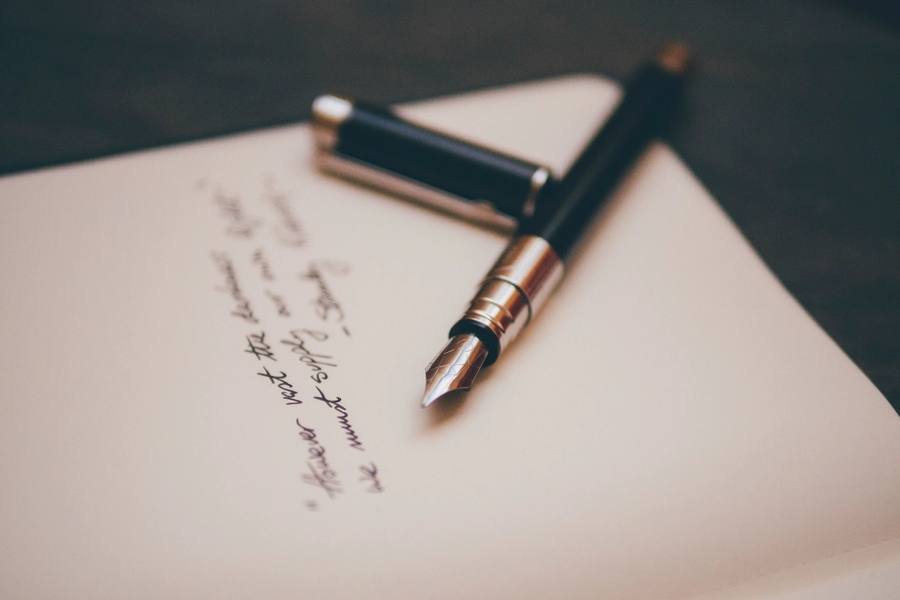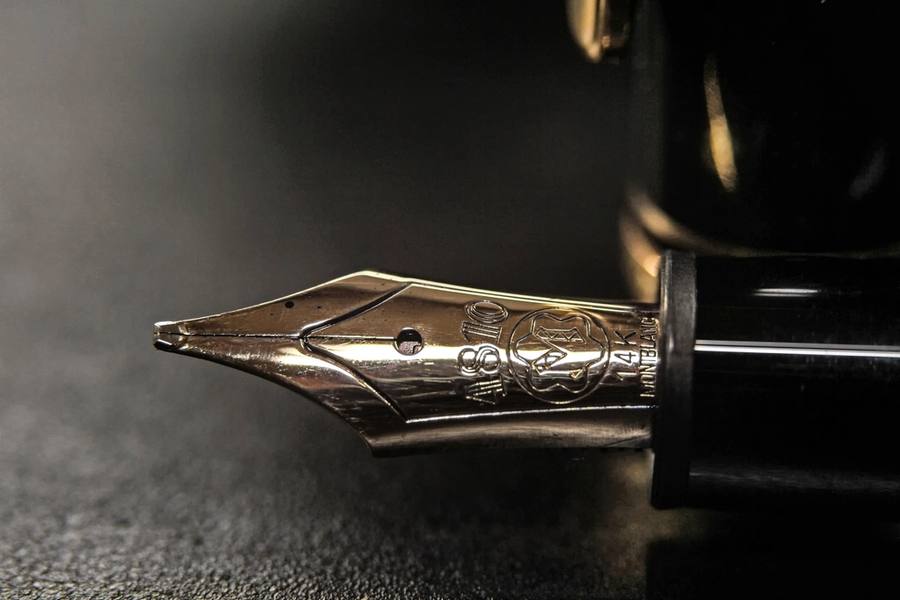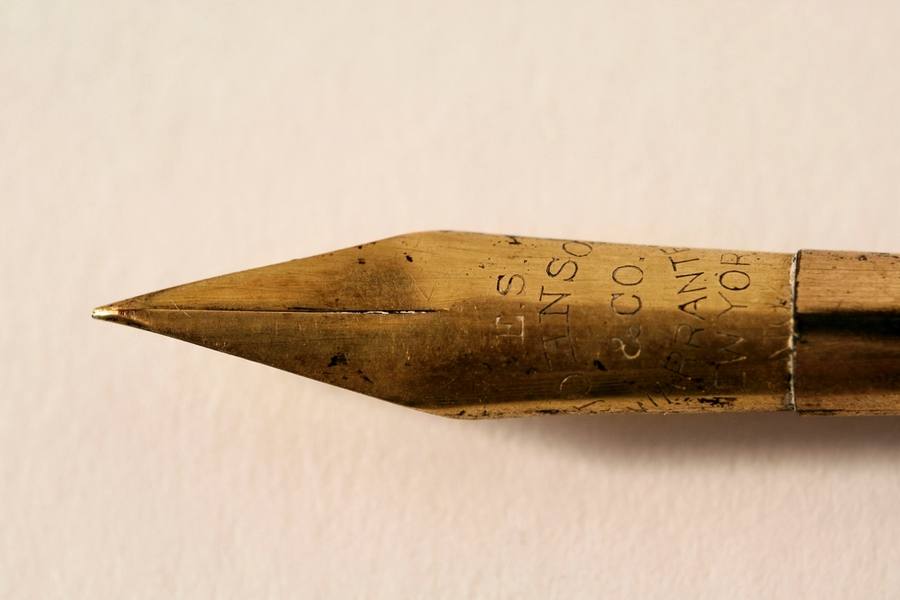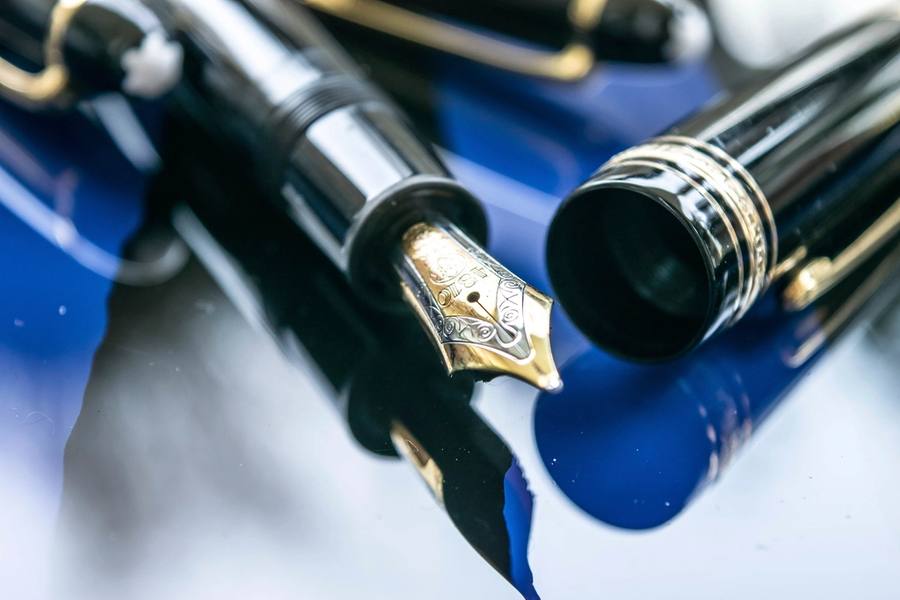
Image illustrative (photo de stock) ; ce n'est pas le produit exact.
The Middle Ground
A ballpoint uses thick oil-based ink requiring real pressure, and a fountain pen uses liquid ink and needs none but requires maintenance, cleaning and care.
A gel rollerball uses water-based ink flowing freely onto the page, which means it writes with very little pressure while being as convenient as a ballpoint.
For most people writing at length, that combination is the practical answer, and it delivers most of the comfort advantage of a fountain pen with none of the upkeep.
No Maintenance At All
A gel pen left in a drawer for a year writes immediately, where a fountain pen would need flushing, and there is nothing to clean, fill or dry out.
When the refill runs out it is replaced in seconds, and the pen requires no attention between those moments.
That reliability is why gel pens dominate everyday writing, and it is a genuine advantage rather than a compromise for anybody who does not want a hobby.
Tip Size And Handwriting
Tip sizes are stated in millimetres, and a fine tip suits small handwriting and produces a precise line, where a broader one lays down more ink and flows more smoothly.
Very fine tips can feel scratchy and drag on textured paper, which is the trade for precision.
Around half a millimetre suits most handwriting, and anybody writing small or on poor paper is better served by something finer.
Drying And Smudging
Gel ink is water based and dries more slowly than ballpoint ink, which means smudging is possible particularly for left-handed writers.
Quick-drying formulations exist specifically for that and are worth seeking out for anybody whose hand follows their writing.
Ink colour availability is far wider in gel than in ballpoint, and the colours are considerably more saturated, which for marking up or colour coding notes is genuinely useful.
Paper affects it considerably, and absorbent paper takes gel ink quickly where coated paper leaves it sitting on the surface.
Cap versus retractable matters for one-handed use, since a retractable pen deploys with a thumb while a capped one needs two hands, and a cap left off dries the tip within hours.
Refills And Waste
A pen taking standard refills can be kept for years with only the cartridge replaced, where a disposable pen is discarded entirely each time.
Refill standards are not universal, and a pen taking a proprietary refill ties you to one manufacturer and can become unusable if that refill is discontinued.
Buying refills in multiples is cheaper and means a dry pen is replaced immediately rather than being set aside and forgotten.
Barrel diameter and grip affect comfort considerably over a long session, and a very thin barrel forces a tighter grip which produces hand fatigue faster. A slightly thicker barrel or a moulded grip section reduces the force needed to hold the pen steady, which matters more over an hour of writing than any ink characteristic does.
The Verdict
The practical everyday writing instrument for most people, offering fountain pen comfort with ballpoint convenience.
Gel ink smudges for left-handers, very fine tips drag, and proprietary refills tie you to a manufacturer.
Buy one taking standard refills. A pen kept for years with only the cartridge replaced is cheaper and less wasteful.
En un coup d'œil
Avantages
- Writes with very little pressure
- No maintenance, cleaning or drying out
- Works immediately after months unused
- Refillable versions last for years
Inconvénients
- Gel ink smudges, especially for left-handers
- Very fine tips drag on textured paper
- Proprietary refills tie you to one maker
- Uses ink faster than a ballpoint
Questions fréquemment posées
How does it compare to a fountain pen?
Most of the comfort with none of the maintenance. Gel ink flows freely so very little pressure is needed, and there is nothing to clean, fill or flush. A gel pen unused for a year writes immediately.
What tip size should I choose?
Around half a millimetre suits most handwriting. Finer gives a more precise line and can feel scratchy on textured paper; broader flows more smoothly and needs larger handwriting to stay legible.
Are refillable pens worth it?
Yes — a pen taking standard refills lasts years with only the cartridge replaced. Avoid proprietary refills, which tie you to one manufacturer and leave a good pen unusable if the refill is discontinued.
Spécifications
| Type | Water-based gel rollerball |
| Position | Between ballpoint and fountain pen |
| Pressure | Very little required |
| Maintenance | None |
| Tip size | Around 0.5 mm suits most handwriting |
| Drying | Slower than ballpoint |
| For left-handers | Quick-drying formulations |
| Refills | Standard sizes preferred over proprietary |
Résumé
Fountain pen comfort with ballpoint convenience. Choose one taking standard refills rather than proprietary ones.
Vérifier le prix sur Amazon