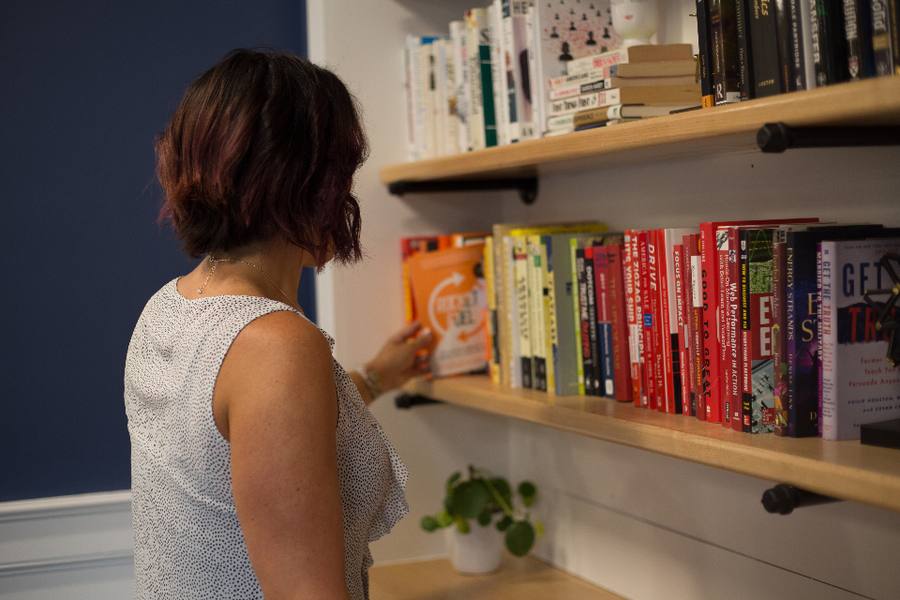
Representative image (stock photo); not the exact product.
Hands Free And Neck Straight
A book flat on a table requires looking down at it, which tilts the head forward and loads the neck over a long session, and it also requires a hand to hold it open.
A stand raises the book to an angle closer to eye level and holds it open, which frees both hands and removes the head tilt.
For reading while eating, following a recipe, or working through a textbook while writing notes, both of those matter considerably.
Page Holders And Spine Damage
Most stands hold pages with clips or arms at the outer edges, which keeps a book open without pressing the spine flat against the frame.
Stands that require a book to be opened flat and pressed down damage the binding over time, particularly on a new or tightly bound book.
A stand whose page holders are adjustable enough to work on a partly opened book is considerably kinder to a binding than one requiring a full flat opening.
Angle Adjustment
The right angle differs between reading at a table, following a recipe while standing, and working at a desk, and a fixed-angle stand suits one of those.
Adjustable stands with a friction hinge or stepped positions cover the range, and stepped ones frequently have the right angle between two settings.
A steeper angle raises the book higher and makes it more likely to tip forward, which is where stability becomes the limiting factor.
Stability And Weight
A large hardback on a light stand tips forward, particularly at a steep angle, and a stand that cannot hold the heaviest book you own is not useful.
Weighted bases and a wide footprint address it, and a folding travel stand is invariably less stable than a fixed one.
Checking the stated capacity and thickness range against your actual books rather than assuming avoids a stand that works for paperbacks only.
Folding And Storage
A stand that folds flat stores in a drawer between uses, where a rigid one occupies desk or shelf space permanently.
Folding designs have hinges that eventually loosen, which produces a stand that no longer holds its angle reliably.
For a stand used daily at a fixed desk, rigid is better; for occasional use put away between times, folding earns its place.
Height is the specification people overlook, since most stands raise a book only slightly and a book on a low stand still requires looking down. Reading at a desk for hours benefits from the book being raised considerably further, which frequently means a stand on top of a box or a riser rather than a taller stand, since very few are made tall enough. Screen height guidance applies equally to a book, and the top of the page sitting near eye level is the target.
Material choice affects more than appearance, since a metal stand can mark a soft cover where a wooden or padded one will not, and an acrylic stand scratches visibly within weeks of daily use. For anything valuable the contact points are what matter, and a stand with felt or silicone where the book rests avoids marking entirely. That detail is rarely mentioned in product descriptions and is easy to check in photographs.
The Verdict
A simple item removing both the head tilt and the need to hold a book open, where page holders and stability determine whether it works.
Stands requiring a flat opening damage bindings, light ones tip under hardbacks, and folding hinges loosen over time.
Check it does not force the spine flat. A stand requiring a book opened fully flat damages the binding over time.
At a glance
Pros
- Frees both hands and removes head tilt
- Suits reading while eating or taking notes
- Adjustable angles cover different situations
- Folding versions store in a drawer
Cons
- Some designs force the spine flat and damage bindings
- Light stands tip under heavy hardbacks
- Folding hinges loosen and lose their angle
- Stepped adjustment often misses the right angle
Frequently asked questions
Will it damage my books?
Some designs will. Stands requiring a book to be opened fully flat and pressed down damage the binding over time, particularly on new or tightly bound books. Look for adjustable page holders that work on a partly opened book.
Will it hold a heavy hardback?
Check the stated capacity and thickness range against your actual books. A large hardback on a light stand tips forward, especially at a steep angle, and folding travel stands are invariably less stable than fixed ones.
Folding or rigid?
Rigid for daily use at a fixed desk, since folding hinges loosen over time and stop holding an angle reliably. Folding for occasional use, where storing it in a drawer between times is worth the compromise.
Specifications
| Type | Adjustable book stand |
| Benefits | Hands free and no head tilt |
| Page holders | Should not require a flat opening |
| Binding risk | Stands forcing spines flat |
| Angle | Adjustable; friction hinge preferred |
| Stability | Weighted base and wide footprint |
| Check | Capacity against your heaviest book |
| Folding | Stores away; hinges loosen over time |
The bottom line
Frees your hands and straightens your neck. Check it does not force the spine flat — that damages bindings.
Check Price on Amazon