Heavy Non-Slip Bookends

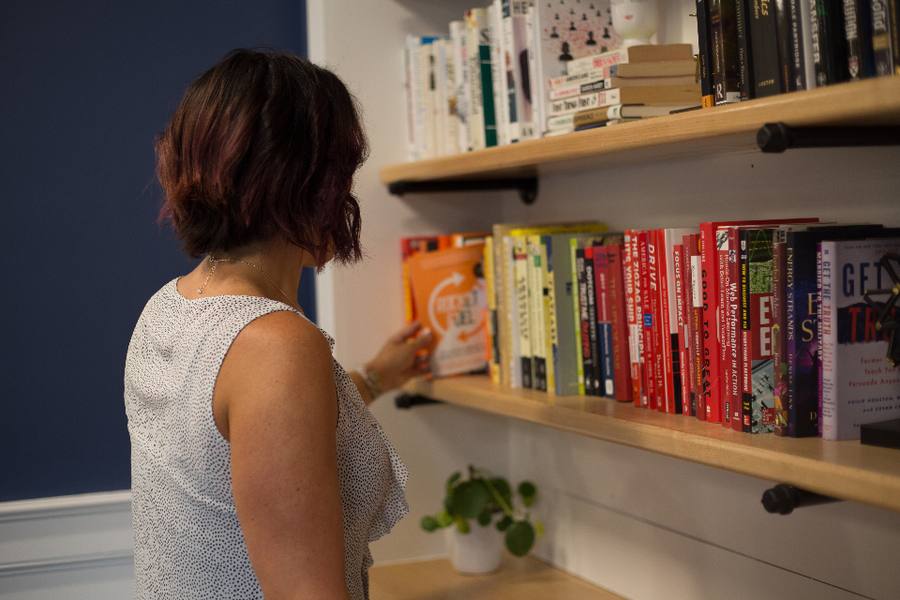
Representative image (stock photo); not the exact product.
Weight Is Almost The Only Thing
A row of books leaning against a bookend exerts considerable sideways force, and a light decorative bookend simply slides across the shelf rather than resisting it.
Weight, or a design that hooks under the books so their own weight holds it down, is what actually works, and everything else is appearance.
That is why solid metal and stone bookends persist while attractive light ones end up holding nothing, and it is the specification worth checking before anything else.
Hooked Designs Use The Books Themselves
An L-shaped bookend with a thin horizontal plate slides under the first few books, whose weight then holds the plate down and the upright in place.
That works regardless of the bookend's own weight, which allows a slim design that holds considerably more than its mass suggests.
The plate is visible under the books unless it is thin, and a thick plate lifts the first book noticeably higher than the rest of the row.
Non-Slip Bases
Felt or rubber on the base increases friction against a shelf considerably, which lets a lighter bookend hold more than it otherwise could.
It also protects a shelf surface from scratching, which on a wooden or painted shelf matters.
Bases wear and peel over years, and a bookend that has lost its felt slides where it previously held, which people attribute to the books rather than the base.
Books Should Not Lean
A book leaning at an angle for years has its spine and binding stressed unevenly, which causes permanent distortion and eventually cracks the binding.
Books should stand fully upright or lie flat, and a leaning row is doing slow damage that only becomes obvious when a book is removed.
That is the actual reason bookends matter beyond tidiness, and for anything worth keeping it is not a cosmetic consideration.
Shelf Depth And Overhang
A bookend shallower than the books it holds contacts only part of the spine, which concentrates force and can damage a cover.
Deeper bookends spread the load across more of the book, and for large or heavy volumes that matters considerably.
Very deep shelves allow books to be pushed back out of alignment, and bringing a row forward to the shelf edge looks better and makes books easier to reach.
There is a cheaper approach that works as well as anything sold as a bookend, which is simply filling a shelf completely so that books support one another and none can lean. A full shelf needs no bookend at all, and bookends exist for the partly filled shelf, which describes most shelves most of the time. Where a shelf is almost full, laying two or three books flat on their side at the end of the row does the same job as a bookend and costs nothing.
The Verdict
A simple item where weight or a hooked design determines whether it works at all, and where the purpose is preventing binding damage rather than tidiness.
Light decorative bookends slide, felt bases wear off, and shallow ones concentrate force on part of a spine.
Buy heavy or hooked. A light decorative bookend slides across the shelf and holds nothing, whatever it looks like.
At a glance
Pros
- Heavy or hooked designs genuinely hold a row
- Prevent the leaning that damages bindings
- Felt bases protect shelves and add friction
- Deep bookends spread load across the spine
Cons
- Light decorative ones slide and hold nothing
- Felt bases wear off and peel over years
- Hooked plates lift the first book higher
- Shallow bookends concentrate force on part of a cover
Frequently asked questions
Why does my bookend slide?
It is too light. A row of books exerts considerable sideways force, and only weight or a hooked plate that the books themselves hold down resists it. Attractive light bookends end up holding nothing whatever they look like.
Does leaning actually damage books?
Yes. A book leaning for years has its spine and binding stressed unevenly, causing permanent distortion and eventually cracking. Books should stand fully upright or lie flat, and the damage only shows when one is removed.
Does depth matter?
A bookend shallower than the books contacts only part of the spine, concentrating force and potentially damaging a cover. Deeper bookends spread the load, which for large or heavy volumes matters considerably.
Specifications
| Type | Weighted or hooked bookends |
| Key specification | Weight, or a hooked plate |
| Hooked design | Book weight holds it down |
| Base | Felt or rubber for friction |
| Real purpose | Preventing leaning that damages bindings |
| Depth | Should match book depth |
| Leaning books | Suffer permanent binding distortion |
| Alignment | Bring rows forward to the shelf edge |
The bottom line
Heavy or hooked, nothing else works. And the point is preventing binding damage from leaning, not just tidiness.
Check Price on Amazon